Showing posts with label John Till. Show all posts

Saturday, December 1, 2012

Sector I5 - New Manila Bay Marine Encounter Table

Our good friend John Till - the workhorse of Strange New World - has written in with a marine encounter table for New Manila Bay in Sector I-5. Enjoy!

Encounter Table - New Manila Bay Marine Encounters

Roll 2D6 and consult the results below.

2. Red patch of water
3. Pod of Rotorfins chopping its way through a school of fish – swimmers beware; number encountered 2-12
4. Quiescent patch of 1D100 nontoxic Cnidarians
5. Bioluminescent group of 1D100 Cnidarians engaged in synchronized pulse-signaling – Roll 1D6; result of 1-3 = toxic group, 4-6 = nontoxic group
6. Dinosauroids swimming deep under water; number encountered is 1-3
7. Dinosauroid catamaran fishing fleet; number of catamarans encountered is 1-6 (2-12 dinosauroids per catamaran, armed with blowguns, nets, spears, knives, and poison powders)
8. Huge hungry mosasauroid
9. Pod of Nautiloids; number encountered is 4-24
10. Radiation trail leading to 1D4 Enigma Boxes on the Bay floor
11. A school of 2D12 armored fish
12. Lone underwater dinosauroid guiding a pod of Rotorfins – toward you; number of Rotorfins encountered is 2-12

Attribution: http://commons.wikimedia.org/wiki/File:Aigialosaurus_bucchichi.jpg

Saturday, November 17, 2012

Sector I-5 - Intelligent Life Inland from Manila Bay?

New Manila Bay area

North shore of Hex 180.73: Several catamarans of local origin can be found hidden in small waterways within the wetlands on the north shore of Hex 180.73. Further exploration inland leads to the discovery of a cluster of several mud huts like these:

Photo c. 2012 John Everett Till

Exploration of the area around the huts proves slow going, as they are built on algae-rich shallow wetland areas with 10-20 cm of stinky green water over a dense layer of mud that is .5 to 1 meter thick.

The huts vary from 5-8 meters in diameter; inside the huts there is a variety of small objects (cutting tools, small piles of painted shells and stones, reeds woven into likenesses of wetland creatures). The center of the hut slopes steeply down so that the “floor” of the hut is in fact a bowl of wetland water with a mud bottom about 3 meters below.

A water-filled channel near the bottom of the hut pool connects this hut to a network of channels leading to the other huts. Visitors will feel they are being observed the entire time they are in this area.

Scanning the nearby forest areas with field glasses will indeed reveal that the explorers are being observed by several brown-green bipedal dinosauroids. These creatures are slightly taller than average humans: they’re about 6’8” tall. Most of them are caked in semi-dried mud. They also carry spears. They will withdraw if the explorers approach.

Hex 180.172: A bit further inland is a lagoon with deeper water. In the middle of the lagoon, three large plant structures rise up above a mud island. These structures are similar in diameter to the huts. The flat round upper structures of these plants have numerous holes. Some contain eggs within them.

Photo c. 2012 John Everett Till

All content copyright 2012 John Till

Everyway RPG Blog

FATE SF RPG Blog

Sunday, July 29, 2012

Sector I-5 - First Look from John Till

Welcome to Sector I-5! The majority of the sector is tropical and/or subtropical with major land masses, islands, and oceans. This looks like a very lush area, with plenty of opportunity for jungle and deep sea exploration. There are also some desert and hill areas on the southwest side of the largest land mass. There is bound to be something interesting in that area as well.


Our initial focus is on Hex 180.73. It is located on the southeast corner of the tear-shaped island to the center-right of the sector map. Most of this hex is a great ocean bay that was identified from orbit as a potential area suitable for coastal settlements and harbor construction.


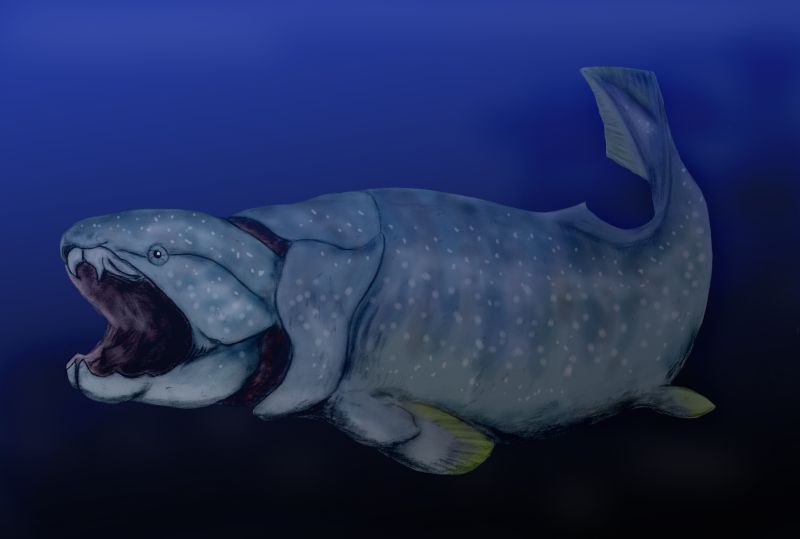
The bay has been dubbed New Manila Bay due to its oppressive humidity. It has abundant marine life including both armored fish (similar to Placodermi) as well as analogues of Earth’s more modern soft-bodied fish.


There are also numerous bioluminescent Cnidarians (jellyfish-like creatures) which surface and congregate several times per day. Their pulsating nocturnal displays are quite remarkable! The creatures also congregate in patterns that display mathematical progressions, which has been rather unsettling for observers.

Another distinctive feature of the bay – one which has been subsequently observed in other ocean areas – is the appearance of red scum on the ocean surface. This coloration is actually the chum created when pods of huge Rotorfish plough through schools of soft-bodied fish, slicing and dicing them before filter feeding on the blood and meat bits.

The soft bodied fish are also a potential food source. Analysis will reveal that if a few genes are altered, the fish will be an excellent source of nutrition for human settlers.

Humans are not the first intelligent species to explore the bay. Indeed, several large catamarans are hidden in one of the bay’s many lagoons. Diligent explorers will find them on the north shore of Hex 180.73.

Be sure to also check out FATEsf.blogspot.com for new and alternative information on Kepler 22-B.

*I hyphenate this because an I (i) looks so much like an l (L)
Related Posts Plugin for WordPress, Blogger...