Saturday, December 1, 2012

Sector I5 - New Manila Bay Marine Encounter Table

Our good friend John Till - the workhorse of Strange New World - has written in with a marine encounter table for New Manila Bay in Sector I-5. Enjoy!

Encounter Table - New Manila Bay Marine Encounters

Roll 2D6 and consult the results below.

2. Red patch of water
3. Pod of Rotorfins chopping its way through a school of fish – swimmers beware; number encountered 2-12
4. Quiescent patch of 1D100 nontoxic Cnidarians
5. Bioluminescent group of 1D100 Cnidarians engaged in synchronized pulse-signaling – Roll 1D6; result of 1-3 = toxic group, 4-6 = nontoxic group
6. Dinosauroids swimming deep under water; number encountered is 1-3
7. Dinosauroid catamaran fishing fleet; number of catamarans encountered is 1-6 (2-12 dinosauroids per catamaran, armed with blowguns, nets, spears, knives, and poison powders)
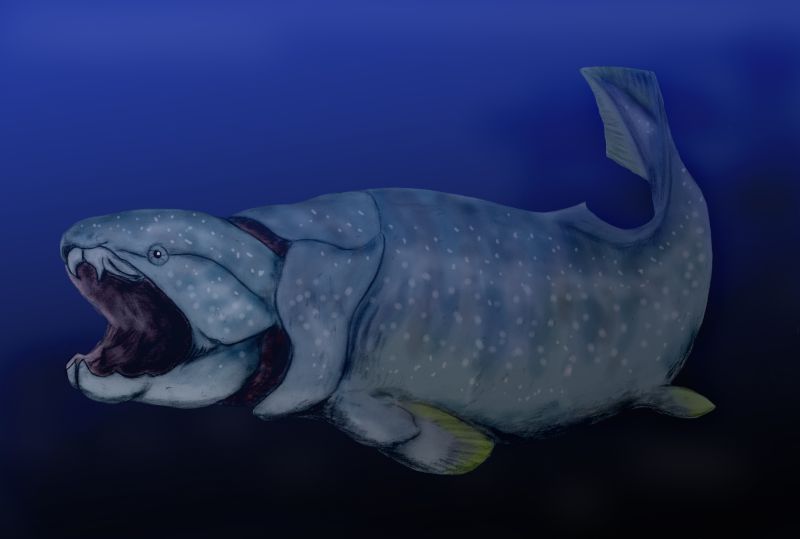
8. Huge hungry mosasauroid
9. Pod of Nautiloids; number encountered is 4-24
10. Radiation trail leading to 1D4 Enigma Boxes on the Bay floor
11. A school of 2D12 armored fish
12. Lone underwater dinosauroid guiding a pod of Rotorfins – toward you; number of Rotorfins encountered is 2-12

Attribution: http://commons.wikimedia.org/wiki/File:Aigialosaurus_bucchichi.jpg

Saturday, November 17, 2012

Sector I-5 - Intelligent Life Inland from Manila Bay?

New Manila Bay area

North shore of Hex 180.73: Several catamarans of local origin can be found hidden in small waterways within the wetlands on the north shore of Hex 180.73. Further exploration inland leads to the discovery of a cluster of several mud huts like these:

Photo c. 2012 John Everett Till

Exploration of the area around the huts proves slow going, as they are built on algae-rich shallow wetland areas with 10-20 cm of stinky green water over a dense layer of mud that is .5 to 1 meter thick.

The huts vary from 5-8 meters in diameter; inside the huts there is a variety of small objects (cutting tools, small piles of painted shells and stones, reeds woven into likenesses of wetland creatures). The center of the hut slopes steeply down so that the “floor” of the hut is in fact a bowl of wetland water with a mud bottom about 3 meters below.

A water-filled channel near the bottom of the hut pool connects this hut to a network of channels leading to the other huts. Visitors will feel they are being observed the entire time they are in this area.

Scanning the nearby forest areas with field glasses will indeed reveal that the explorers are being observed by several brown-green bipedal dinosauroids. These creatures are slightly taller than average humans: they’re about 6’8” tall. Most of them are caked in semi-dried mud. They also carry spears. They will withdraw if the explorers approach.

Hex 180.172: A bit further inland is a lagoon with deeper water. In the middle of the lagoon, three large plant structures rise up above a mud island. These structures are similar in diameter to the huts. The flat round upper structures of these plants have numerous holes. Some contain eggs within them.

Photo c. 2012 John Everett Till

All content copyright 2012 John Till

Everyway RPG Blog

FATE SF RPG Blog

Friday, September 28, 2012

An Intro to Sector T-3


Hereticworks does not mess around when it comes to Kepler22B!

Check out their intro to their sector BY CLICKING HERE

These folks put my inane ramblings to shame! Excelsior!

Tuesday, September 18, 2012

More Locales from Beautiful Sector C6

A few more looks into my region of K22b - enjoy!

The Pointer: A clearing here features a rather vast stone, dark grey, carved in the shape of the head of a magrippa bird, one of the local fauna, a black bird that resembles a cross between a shrike and a flamingo. The stone points toward an abandoned city of the short, headless crab people - an ancient people apparently now extinct.

Bunker: Folks walking through the underbrush of this hex might fall through a mat of dried, woven grass into a large, subterranean bunker. The chamber they fall into is dusty and filled with refuse. There are three sealed doors here that lead into the rest of the complex, which was apparently used in case of an atomic war - a war that very well might have happened, given the relative lack of native technology in this region. Explorers of the bunker might discover that it was built by the three-toed people. It contains some of their ancient, atomic-aged weaponry (no usable batteries, and one would have to rig up a way to make any of it work), samples of their pop culture (runs the gamut from books about philosophy to girly magazines), and a wide variety of colored lenses, the purpose of which is unknown.

Blazing Falls: A waterfall in this hex has a very high gas content and, in essence, is on fire. The fire runs into the pool beneath it and down the river a ways. The source of the gas is unknown, but would be a dandy thing for a scientific survey to discover!

Grand Altar: An alien ruin in this hex looks like a giant, spherical construction of pink-gray stone. A set of stairs leads up to a portal of pale pink jade and a door long since battered down. Within the temple, there is a floor of mosaic tiles depicting some sort of pink worms and the mysterious three-toed people destroying the headless crab people. There is a hole in the floor from which seeps some sort of colorless gas with a petroleum smell. If lit, it bursts into flames which form into a weird sphere that fills the center of the temple like a great, flaming all-seeing eye. The effect is extremely unnerving. The temple heats up quickly, and will be nearly unbearable in 10 minutes time.

Sunday, July 29, 2012

Sector I-5 - First Look from John Till

Welcome to Sector I-5! The majority of the sector is tropical and/or subtropical with major land masses, islands, and oceans. This looks like a very lush area, with plenty of opportunity for jungle and deep sea exploration. There are also some desert and hill areas on the southwest side of the largest land mass. There is bound to be something interesting in that area as well.


Our initial focus is on Hex 180.73. It is located on the southeast corner of the tear-shaped island to the center-right of the sector map. Most of this hex is a great ocean bay that was identified from orbit as a potential area suitable for coastal settlements and harbor construction.


The bay has been dubbed New Manila Bay due to its oppressive humidity. It has abundant marine life including both armored fish (similar to Placodermi) as well as analogues of Earth’s more modern soft-bodied fish.


There are also numerous bioluminescent Cnidarians (jellyfish-like creatures) which surface and congregate several times per day. Their pulsating nocturnal displays are quite remarkable! The creatures also congregate in patterns that display mathematical progressions, which has been rather unsettling for observers.

Another distinctive feature of the bay – one which has been subsequently observed in other ocean areas – is the appearance of red scum on the ocean surface. This coloration is actually the chum created when pods of huge Rotorfish plough through schools of soft-bodied fish, slicing and dicing them before filter feeding on the blood and meat bits.

The soft bodied fish are also a potential food source. Analysis will reveal that if a few genes are altered, the fish will be an excellent source of nutrition for human settlers.

Humans are not the first intelligent species to explore the bay. Indeed, several large catamarans are hidden in one of the bay’s many lagoons. Diligent explorers will find them on the north shore of Hex 180.73.

Be sure to also check out FATEsf.blogspot.com for new and alternative information on Kepler 22-B.

*I hyphenate this because an I (i) looks so much like an l (L)

Monday, July 23, 2012

What The?

I don't know what this is. Found it on Wikimedia Commons. I do know that it is the work of Gnot Guedin, so don't steal it. Just enjoy it.

Click to make larger - you need to see if full size to appreciate the work.

Thursday, July 19, 2012

More from Sector C6

Image from wikipedia
Hermits in the Hills: These hills have long been attractive to a breed of strange, religious hermits from the south. The caves are dry and cool, and the landscape abounds in easily accessed edibles, especially a button-sized mushroom that helps the hermits slip into their trances. The soft-shelled southerners have built quite a pilgrimage business around these hermits, with well-traveled trails leading down from the hills to large wooden roadhouses with grand courtyards, stables, etc. These are linked to the southern market towns via brick roadways that are beginning to show their age. Spacers are generally unwelcome at the roadhouses and in the Hermitage Hills, as they are considered a pox on the local culture and a threat to the ruling elite of the market towns. The loudest opposition comes from the few spacers that live among these people and have "gone native" - though not so native as to not use a blaster to fry unwelcome intruders.

Mining Operation: A small band of prospectors has set up an illegal mining operation here, using heavy industrial disintegrators to plow up large swathes of the landscape to get to the veins of valuable ores (triskellium, lopadite and pseudo-silver deposits) below. The last batch of rains washed down from the hills and destroyed a portion of the camp and caused a flood in the lowlands. The sodden landscape is now crawling with bee-spiders, whose stings carry a rotting disease that has claimed many of the miners.

Landing Strip: The survey scouts have cleared this area to build a landing strip. The strip is too small for large, interplanetary craft, but is perfect for the light atmosphere freighters that deliver supplies from the Port Gernsback. A small caretaker's shack has been constructed from corrugated plaz-board and tin packing sheaths, and is lived in by Urgo Ezbik, an odd man who survived a zombie war but lost his left arm (he thinks it is still out there looking for him) and a small piece of his sanity. Still, he's a wiz with aircraft repairs. He has stocks of ammunition and food hidden throughout the area.

Olvugai Scout Survey: A team of olvugai are scouting this area in pogos on behalf of the Andromeda Confederation. They are mercenary scientists, but not particularly violent. One has been infected by alien bacteria (an oddity for olvugai) and they are at a loss to solve the problem, as their small supply of medicinal powders and tonics has proven ineffective.

Ancient City: The remains of an ancient city of the three-toed people sits here, choked by jungle and as-yet unexplored by spacers. The ruins hide large reservoirs of fresh water (much of it heavy), a large idol of golden-radium, subterranean laboratories, armories, treasure vaults and summoning chambers, and other wondrous things. Those who enter must beware the fungal growths that look like unicorn horns that will inevitably spring up on their unprotected skulls. The images of the three-toed people all show similar horns on their heads. They are, in fact, a form of fungal parasite/symbiote that did most of that species' heavy thinking and planning. They survive as an airborne fungus that clings to and then grows on sentient beings. There is a 1 in 6 chance per person they grow on that they will make meaningful contact and begin conquering their mind. Otherwise, they scramble a person's synapses and leave them a shuddering, incoherent mass on the forest floor.

Three bull zartodons have taken up residence here, sending out arcs of photovoltaic energy to attract females.


Related Posts Plugin for WordPress, Blogger...