Monday, December 9, 2013

Sector T-3: Events & Encounters

The good folks at HereticWorks have just come through with a table of events and encounters for sector T-3 of Keppler23B. Here's a sample ...

1. The last 3 planetary days have seen a massive pollination-event along the coasts of the salt-sea. Thousands of species of plants are involved. Everything is coated with a 1d4 inch layer of sticky pollen in a wide array of colors.

2. Due to a series of violent underwater tremors followed by the venting of super-heated volcanic gasses, there have been multiple die-offs among deepwater fish. The venting has also formed a series of pockets of warmer than usual waters rich in sulfur and selenium, among other trace minerals. Where the fish have been decimated by this event, hordes of shellfish, crustaceans and other, hardier species have proliferated in the hotter, more acidic waters of these pockets. It is undetermined as yet if this is only a temporary phenomenon, some sort of cyclical event, or a one-time cataclysm.

3. Forest fires have swept portions of the Mountain Ranges North of the Great Bay. The fires were started by thunderstorms.

If you want to read more, head on over to their excellent blog and let your eyeballs do the walkin'.

Friday, February 8, 2013

While driving to work this morning, I was listening to classical music and musing on the design of cars and spaceships. I don't mean real spaceships, of course - I mean the kind you see in movies, comic books, pulp fiction and television - the good stuff. I also started thinking about mens' taste in women, and how the styles of disparate things tend to conflate at different times. With that in mind, I decided I was going to put together some images from different years (or small spans of years) of the top spaceship of that time, the top car of that time and what were considered the top sex symbols of that time to see if they clicked.

Here we go ...


We'll begin with 1929 and Buck Rogers. The spaceship was still in the "could have been designed by lonely housewives" era. Fairly sleek and only a few doodads stuck to the outside of the ship. For our car, we have a 1929 Duesenberg - also pretty sleek, formal and yet also sporty. Whether Buck's spaceship had leather seats, I don't know. For our sci-fi beauty, we have Col. Wilma Deering, Buck's erstwhile companion and drawn as a classic beauty of the era - rounded face and graceful lips.


By 1936, Flash Gordon has burst onto the scene in the first of his film adaptations. The spaceship isn't much different than Buck Rogers' craft, though perhaps a bit sportier (check out the chrome!). Dale Arden, as played by Jean Rogers, conforms pretty closely to the earlier beauty standard, and the car isn't terribly different from the 1929 Duesenberg, though you'll note the nose is slanted back a bit.


1950 brought the film classic (?) Destination Moon. Destination Moon at least played on being hard sci-fi, though the design was definitely of the moderne period, with the sleek spacecraft. The beauty of 1950, Erin O'Brien-Moore was pretty sleek herself, and shows how tastes were changing at the dawn of a new decade. The car is a bit more compact than in the 1930's, but in this case it looks like the spaceship designs are beginning to presage developments in automobiles.


In 1956, Forbidden Planet put earthlings in a flying saucer (guess those captured German scientists were finally earning their keep). Beauty isn't much changed from 6 years ago, and the car, a 1956 Chevy Bel Air, is not yet exhibiting the giant fins that will grace vehicles in the late 1950's and early 1960's.


By 1966, Star Trek has premiered. The Enterprise is unlike any spaceship audiences have seen before, and also notable is that the sole beauty of the cast (unless you include Sulu) is a black woman! Nichelle Nichols typified late '60s beauty - curves and tall hair. The cars are becoming more slick as well - away from the tail-fins and into the muscle car era.


The next big leap, in this case back in some ways and forward in others, was 1977's Star Wars (you might have heard of it). For the first time on film, we get a real sense of the "starfighter" - fighter aircraft in space. Yeah, the Star Destroyers were pretty iconic as well, but you really can't beat the X-Wings and TIE Fighters for capturing the imagination of kids in that era. Our beauty is, of course, Princess Leia (Carrie Fisher), who really found herself thrust into unfamiliar territory in her slave girl costume. The 1977 Ferrari pictures seems to have a similar profile to those X-Wings.


One last stop, and a leap forward to one of my favorite sci-fi series - Red Dwarf. Not American, and played for laughs, it introduced a completely utilitarian (and grandiose) spacecraft in the eponymous Red Dwarf. By 1994, we had maybe my favorite of all the sci-fi beauties introduced on this post - Chloƫ Annett as Kristine Kochanski (I like my women smart, beautiful and with a wry sense of humor) and the fairly utilitarian Rover. Substance over style in 1994 sci-fi.

Okay, there's many more I could do - various incarnations of Star Trek, Alien, etc. I'll leave further explorations to others.

Saturday, December 1, 2012

Sector I5 - New Manila Bay Marine Encounter Table

Our good friend John Till - the workhorse of Strange New World - has written in with a marine encounter table for New Manila Bay in Sector I-5. Enjoy!

Encounter Table - New Manila Bay Marine Encounters

Roll 2D6 and consult the results below.

2. Red patch of water
3. Pod of Rotorfins chopping its way through a school of fish – swimmers beware; number encountered 2-12
4. Quiescent patch of 1D100 nontoxic Cnidarians
5. Bioluminescent group of 1D100 Cnidarians engaged in synchronized pulse-signaling – Roll 1D6; result of 1-3 = toxic group, 4-6 = nontoxic group
6. Dinosauroids swimming deep under water; number encountered is 1-3
7. Dinosauroid catamaran fishing fleet; number of catamarans encountered is 1-6 (2-12 dinosauroids per catamaran, armed with blowguns, nets, spears, knives, and poison powders)
8. Huge hungry mosasauroid
9. Pod of Nautiloids; number encountered is 4-24
10. Radiation trail leading to 1D4 Enigma Boxes on the Bay floor
11. A school of 2D12 armored fish
12. Lone underwater dinosauroid guiding a pod of Rotorfins – toward you; number of Rotorfins encountered is 2-12

Attribution: http://commons.wikimedia.org/wiki/File:Aigialosaurus_bucchichi.jpg

Saturday, November 17, 2012

Sector I-5 - Intelligent Life Inland from Manila Bay?

New Manila Bay area

North shore of Hex 180.73: Several catamarans of local origin can be found hidden in small waterways within the wetlands on the north shore of Hex 180.73. Further exploration inland leads to the discovery of a cluster of several mud huts like these:

Photo c. 2012 John Everett Till

Exploration of the area around the huts proves slow going, as they are built on algae-rich shallow wetland areas with 10-20 cm of stinky green water over a dense layer of mud that is .5 to 1 meter thick.

The huts vary from 5-8 meters in diameter; inside the huts there is a variety of small objects (cutting tools, small piles of painted shells and stones, reeds woven into likenesses of wetland creatures). The center of the hut slopes steeply down so that the “floor” of the hut is in fact a bowl of wetland water with a mud bottom about 3 meters below.

A water-filled channel near the bottom of the hut pool connects this hut to a network of channels leading to the other huts. Visitors will feel they are being observed the entire time they are in this area.

Scanning the nearby forest areas with field glasses will indeed reveal that the explorers are being observed by several brown-green bipedal dinosauroids. These creatures are slightly taller than average humans: they’re about 6’8” tall. Most of them are caked in semi-dried mud. They also carry spears. They will withdraw if the explorers approach.

Hex 180.172: A bit further inland is a lagoon with deeper water. In the middle of the lagoon, three large plant structures rise up above a mud island. These structures are similar in diameter to the huts. The flat round upper structures of these plants have numerous holes. Some contain eggs within them.

Photo c. 2012 John Everett Till

All content copyright 2012 John Till

Everyway RPG Blog

FATE SF RPG Blog

Friday, September 28, 2012

An Intro to Sector T-3


Hereticworks does not mess around when it comes to Kepler22B!

Check out their intro to their sector BY CLICKING HERE

These folks put my inane ramblings to shame! Excelsior!

Tuesday, September 18, 2012

More Locales from Beautiful Sector C6

A few more looks into my region of K22b - enjoy!

The Pointer: A clearing here features a rather vast stone, dark grey, carved in the shape of the head of a magrippa bird, one of the local fauna, a black bird that resembles a cross between a shrike and a flamingo. The stone points toward an abandoned city of the short, headless crab people - an ancient people apparently now extinct.

Bunker: Folks walking through the underbrush of this hex might fall through a mat of dried, woven grass into a large, subterranean bunker. The chamber they fall into is dusty and filled with refuse. There are three sealed doors here that lead into the rest of the complex, which was apparently used in case of an atomic war - a war that very well might have happened, given the relative lack of native technology in this region. Explorers of the bunker might discover that it was built by the three-toed people. It contains some of their ancient, atomic-aged weaponry (no usable batteries, and one would have to rig up a way to make any of it work), samples of their pop culture (runs the gamut from books about philosophy to girly magazines), and a wide variety of colored lenses, the purpose of which is unknown.

Blazing Falls: A waterfall in this hex has a very high gas content and, in essence, is on fire. The fire runs into the pool beneath it and down the river a ways. The source of the gas is unknown, but would be a dandy thing for a scientific survey to discover!

Grand Altar: An alien ruin in this hex looks like a giant, spherical construction of pink-gray stone. A set of stairs leads up to a portal of pale pink jade and a door long since battered down. Within the temple, there is a floor of mosaic tiles depicting some sort of pink worms and the mysterious three-toed people destroying the headless crab people. There is a hole in the floor from which seeps some sort of colorless gas with a petroleum smell. If lit, it bursts into flames which form into a weird sphere that fills the center of the temple like a great, flaming all-seeing eye. The effect is extremely unnerving. The temple heats up quickly, and will be nearly unbearable in 10 minutes time.

Sunday, July 29, 2012

Sector I-5 - First Look from John Till

Welcome to Sector I-5! The majority of the sector is tropical and/or subtropical with major land masses, islands, and oceans. This looks like a very lush area, with plenty of opportunity for jungle and deep sea exploration. There are also some desert and hill areas on the southwest side of the largest land mass. There is bound to be something interesting in that area as well.


Our initial focus is on Hex 180.73. It is located on the southeast corner of the tear-shaped island to the center-right of the sector map. Most of this hex is a great ocean bay that was identified from orbit as a potential area suitable for coastal settlements and harbor construction.


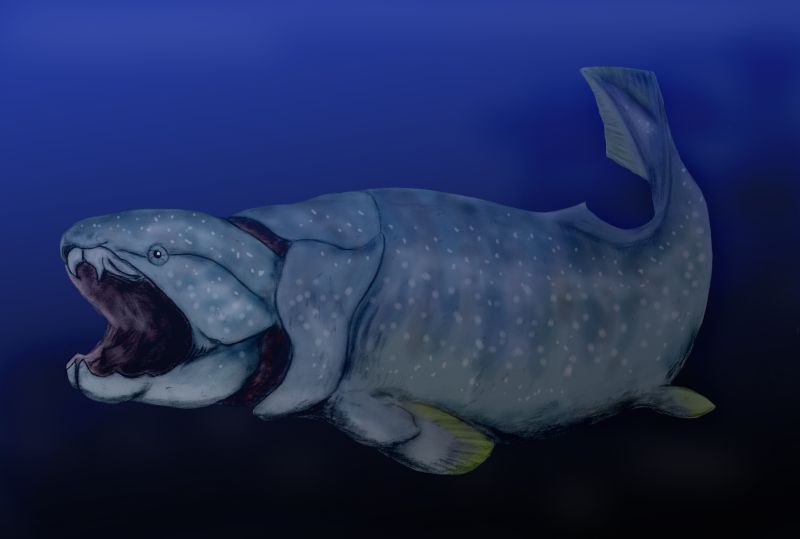
The bay has been dubbed New Manila Bay due to its oppressive humidity. It has abundant marine life including both armored fish (similar to Placodermi) as well as analogues of Earth’s more modern soft-bodied fish.


There are also numerous bioluminescent Cnidarians (jellyfish-like creatures) which surface and congregate several times per day. Their pulsating nocturnal displays are quite remarkable! The creatures also congregate in patterns that display mathematical progressions, which has been rather unsettling for observers.

Another distinctive feature of the bay – one which has been subsequently observed in other ocean areas – is the appearance of red scum on the ocean surface. This coloration is actually the chum created when pods of huge Rotorfish plough through schools of soft-bodied fish, slicing and dicing them before filter feeding on the blood and meat bits.

The soft bodied fish are also a potential food source. Analysis will reveal that if a few genes are altered, the fish will be an excellent source of nutrition for human settlers.

Humans are not the first intelligent species to explore the bay. Indeed, several large catamarans are hidden in one of the bay’s many lagoons. Diligent explorers will find them on the north shore of Hex 180.73.

Be sure to also check out FATEsf.blogspot.com for new and alternative information on Kepler 22-B.

*I hyphenate this because an I (i) looks so much like an l (L)
Related Posts Plugin for WordPress, Blogger...